
In his radio/You Tube address today, Barack Obama announced what I’m sure some pundit somewhere will call a New Deal-style plan to revive the economy:
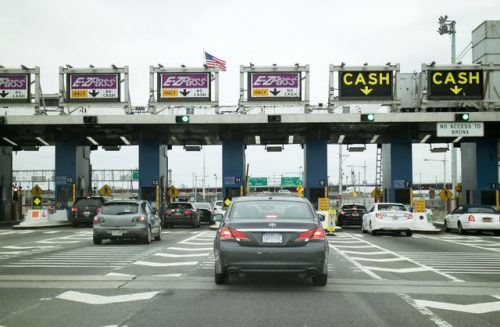
CHICAGO — President-elect Barack Obama said Saturday that he had started work on a sustained, two-year economic stimulus plan designed to create or save 2.5 million jobs, funnel money toward public works programs to repair the country’s failing infrastructure and invest in alternative energy programs.
Mr. Obama’s plan, which he announced in the Democratic radio address, is broader than the pledges he offered while campaigning for president. He said the deepening financial outlook demanded more robust action, so he directed his economic team to devise “a plan big enough to meet the challenges we face that I intend to sign soon after taking office.”
Mr. Obama said he hoped to have the plan completed, approved by Congress and ready for his signature shortly after he takes office in January.
“The news this week has only reinforced the fact that we are facing an economic crisis of historic proportions,” Mr. Obama said. “We now risk falling into a deflationary spiral that could increase our massive debt even further.”
(…)
“We’ll be working out the details in the weeks ahead, but it will be a two-year, nationwide effort to jumpstart job creation in America and lay the foundation for a strong and growing economy,” Mr. Obama said. “We’ll put people back to work rebuilding our crumbling roads and bridges, modernizing schools that are failing our children, and building wind farms and solar panels, fuel-efficient cars and the alternative energy technologies that can free us from our dependence on foreign oil and keep our economy competitive in the years ahead.”
Though few details were provided, Mr. Obama’s proposal would most likely require the new administration to go back to Congress for approval of a significant jobs and infrastructure program beyond the money it has already authorized for the financial bailout. Democratic leaders have been calling for a robust economic recovery initiative including large spending on infrastructure to create jobs, but the Bush administration has refused to consider it.
This is all standard Democratic make-work project nonsense.
Let’s just be blunt about — taxing money from one person, via taxation, and giving it to another via a roads project, or whatever government project you could name, doesn’t create real economic growth. It’s merely robbing Peter to pay Paul.
More interesting, though, is what may be a change in stance on Obama’s part on taxes:
In the presidential campaign, Mr. Obama focused largely on tax cuts for low-wage and middle-class workers and tax breaks for small businesses. But as part of a stimulus package, his advisers have discussed letting the Bush tax cuts for the wealthiest Americans expire after 2010 as scheduled. That, in effect, would delay the tax increases that rich taxpayers would have faced had Mr. Obama repealed the Bush tax cuts a year or two early as he had suggested in his campaign.
Mr. Obama would extend the Bush tax cuts for households with less than $250,000 annual income.
That could have both economic and political benefits. Economically, Mr. Obama would not be open to the charge from Republicans and other critics that he is raising taxes in a recession, which many believe is counterproductive. His Republican presidential rival, Senator John McCain, raised that argument in their election battle.
Politically, by simply letting the tax cuts expire, Mr. Obama would get the benefit of higher revenues in 2011 and beyond to help finance his proposed health care plans without having to take any action himself, and without the Democratic majorities in Congress having to take a vote. He has less political need for higher revenues in the short term because the seriousness of the economic crisis has brought bipartisan agreement that the government must do whatever it can to spur economic growth through spending and tax cuts and cannot worry about deficits for the time being.
So basically, what we’re talking about is a stealth tax cut just around the time that the economy is likely to be coming out of what is looking like a very deep recession.
Doesn’t sound like a good idea to me.
Update: Robert Stacey McCain details exactly what’s wrong with Obama’s plan:
This is nothing but orthodox Keynesianism, and it won’t work, because Keynes was wrong. The secret to economic growth is not government “investment,” it’s increasing the capital supply. And it’s not exactly a secret, either.
Obama has fallen for the 20th-century liberal fallacy that government spending or government-directed spending has some magical quality that private economic activity does not. Republicans have claimed credit for “job creation” by cutting taxes, but Obama’s suggestion of “creating jobs” via government expenditure overlooks the fact that government doesn’t create money out of thin air. There are three ways in which government can get money to spend: (a) by taxing, (b) by borrowing, or (c) by inflation. And all three involve harm to the private sector, thus Jefferson’s maxim that the government that governs best is that which governs least. A tight-fisted Coolidge-style parsimony is always better policy in the long run than LBJ-style tax-and-spend liberalism.
Engaging in Keyensian pump-priming under our current economic conditions isn’t likely to make anything better in either the short or the long run and, given the impact it’s likely to have on investment and the Federal Budget Deficit, it’s likely to cause a lot more harm than good.
Obama would be better to put forward a plan that encourages investment, entrepreneurship, and employment without the heavy-hand of government interference.
Of course, if he did that, he wouldn’t be a Democrat.

Since when has investing in our infrastructure ever made us less competitive or hurt our economy? It’s when we don’t do these things that we fall further behind more progressive nations that understand the value of improving the foundations that makes capitalism possible in the first place.
Also, pump priming would do more harm than good? The New Deal created a reality where we were ready for WWII, and WWII was the biggest public works program in the history of the world. What happened after that? One of the biggest economic expansions we’ve ever seen in our nation’s history. And while it’s true that we did carry a lot of debt during that time, we were able to rapidly pay it down while increasing social programs throughout the 50s, 60s and 70s. When did debt shoot back up and the middle class start to flatline? 1980. When did debt go back down and middle class begin to expand again? 1992. When did debt go back up again and the wealth gap increase? 2000.
One last note, it would be refreshing if you’d acknowledge that this isn’t Obama’s entire economic plan. It’s merely one part of it.
Justin,
It’s really a fairly simple argument.
The money that the government uses to create these make-work projects can only come from one of two sources.
It either comes from increased taxation, which reduces overall economic growth, thus hurting the economy as a whole.
Or,
It comes from opening up the printing presses and creating money out of thin air, which both increases the budget deficit and increases inflation.
What Obama is proposing is nothing more than the same old failed Keynesian nonsense.
Disappointing to say the least.
Doug,
Well, there is a third way. You can borrow money from foreign interests and drive up the debt.
Still, why didn’t you address ANY of my points? Keynesian economic policies do work when big, bold action is needed. History proves this out, as I’ve pointed out. I’m not saying that anybody should be purely Keynesian in the least, just like nobody should be purely tied to Friedmanomics.
Justin,
Your third option is basically a variation on the printing money scheme, with the added benefit of increasing the national debt and artificially raising interest rates.
As for the remainder of your points, they aren’t necessarily something that can be addressed in a blog comment. Suffice it to say that there’s plenty of evidence out there that the Keynesian pump-priming of the New Deal didn’t really accomplish everything that conventional wisdom gives it credit for. In reality, the United States wasn’t anywhere close to recovering from the Great Depression until domestic military production started up in response to events in Europe. Putting people to work in the CCC digging ditches didn’t really solve anything then, and it won’t solve the underlying problems that created the mess we’re in today.
[...] Last month, Barack Obama announced that he would be proposing an economic plan to “save or create” 2.5 million jobs over two years. [...]